Modernising Delta

Transforming a Fragile Legacy Platform

Or how to navigate technical debt, undocumented architecture, and stakeholder constraints to modernise a complex B2B procurement system.
Delta logo

Role:
Senior UX/UI Designer

Tasks:
Requirements Gathering, Research, Analysis, Design, User testing, Mentoring, Team alignment

Background


Context

Delta, part of BiP’s B2B procurement product suite, was to be transformed from a legacy platform to a modern, accessible experience.


Problem

Delta had a fragile, unpredictable, and undocumented codebase, outdated and inconsistent UI, poor accessibility, and complex user journeys offering little guidance. These issues left users struggling to complete essential procurement tasks efficiently, while its technological debt created additional constraints for the engineering team.


Stakeholders rejected a full rebuild due to cost, requiring us to modernise the platform within significant technical constraints.

Rebuild wasn’t an option.
Safe, strategic modernisation was.

Discovery


Research & System Audit

To understand the scope and risk of modernising Delta, I audited both the user experience and its underlying system dependencies:

  • Mapped core tasks and journeys to create a functional blueprint of the undocumented system.
  • Conducted a heuristic and accessibility evaluation across the platform to identify inconsistencies, friction points, and compliance gaps.
  • Led customer research sessions to distinguish between critical pain points and areas that were functioning well, ensuring we prioritised high-impact improvements.
  • Facilitated stakeholder workshops to surface business constraints and non-negotiable requirements.

This phase clarified where we could safely modernise and where changes required deeper technical validation.
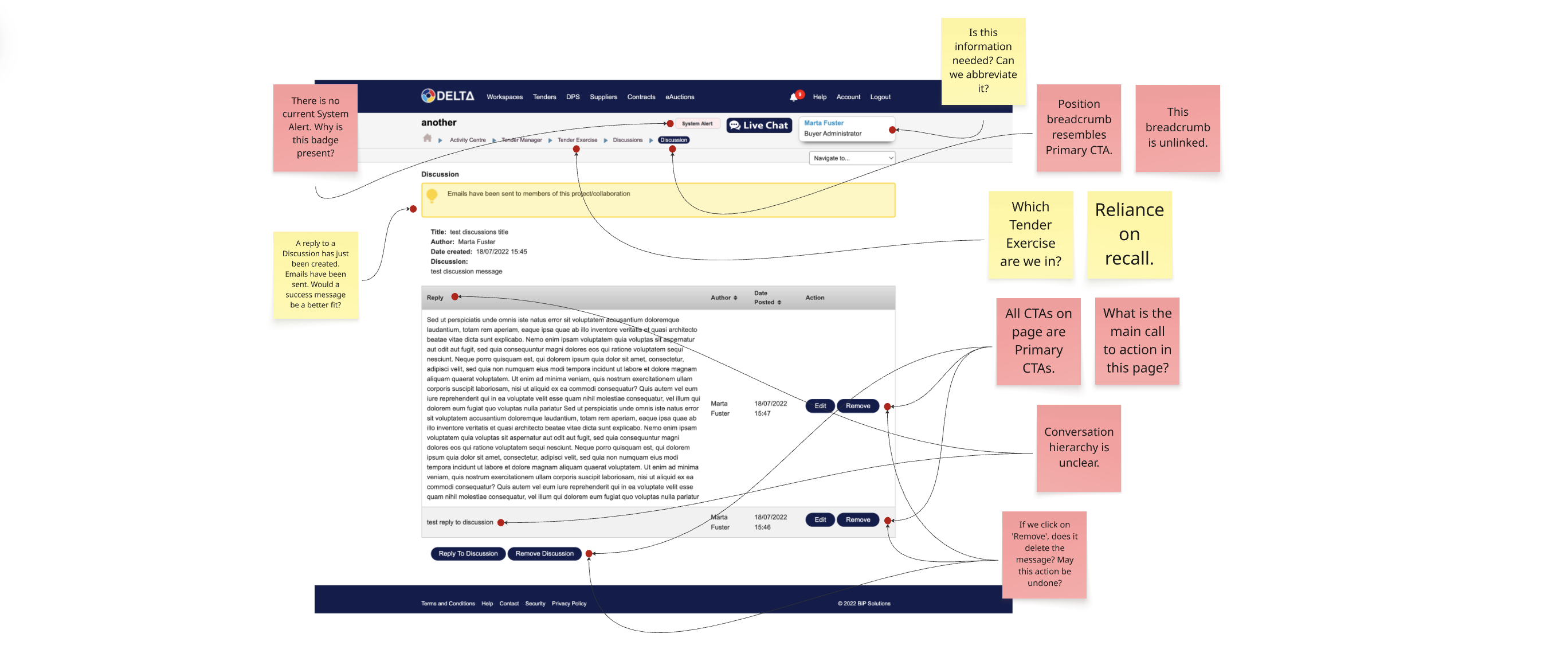
Example of evaluation of Delta platform. Example of evaluation of Delta platform.

Key Challenges

Discovery highlighted two primary risks:

  • How might we modernise the interface, improve usability, and introduce WCAG 2.1 AA standards without destabilising fragile, undocumented code?
  • How might we simplify key procurement journeys without unintentionally disrupting critical business processes?

Strategy

Given the technical constraints, I adopted a risk-aware, collaborative approach:

  • Initiated joint design–engineering workshops to surface hidden dependencies early and validate proposed changes throughout the prototyping phase.
  • Established iterative validation loops through biweekly sprint reviews, using demos to test assumptions with stakeholders and gather early feedback.
  • Framed modernisation as incremental and structured, ensuring alignment across product, engineering, and business teams.
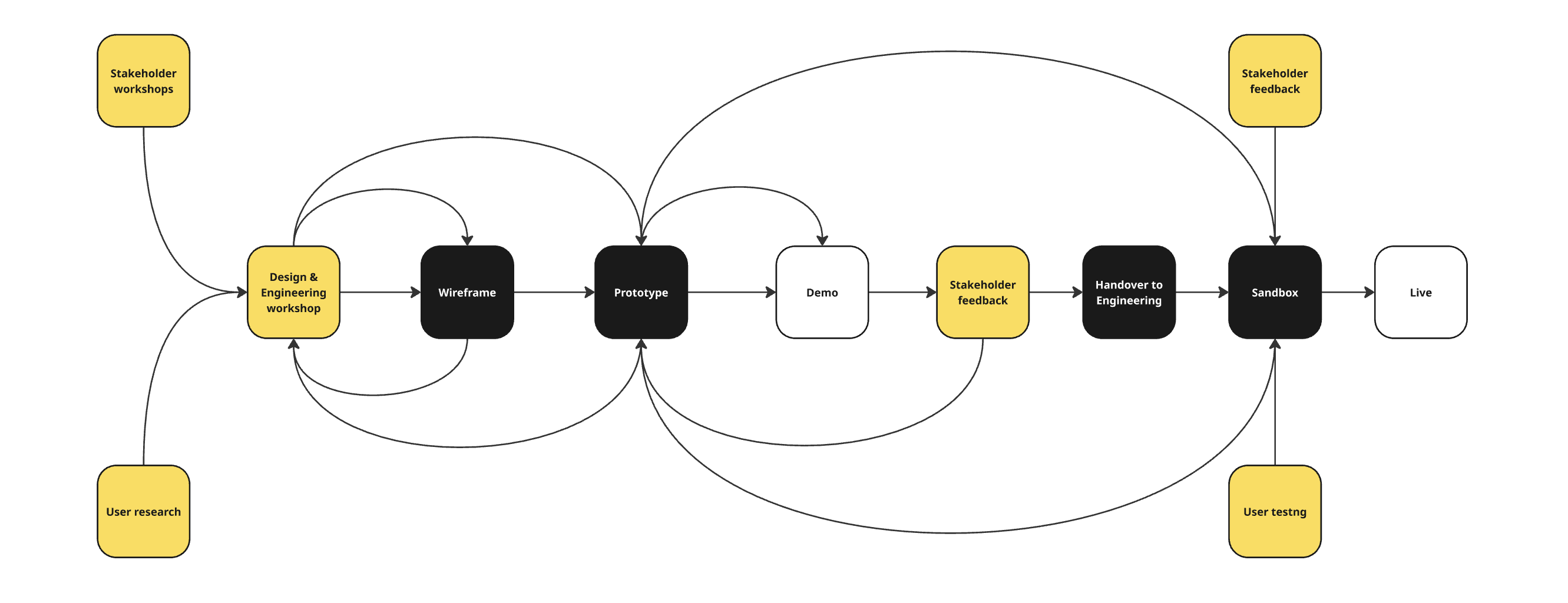
Diagram of a collaborative strategy for Delta transformation. Collaborative strategy for Delta transformation.
The core challenge was not visual redesign — it was managing transformation without disruption.

Process

Design System

To create a scalable and future-proof platform, I led the development of a Design System that could support Delta’s multi-brand portals and the wider BiP product suite.

  • Conducted secondary research on the UK Government Design System, ensuring familiar patterns for our users, who frequently interact with government platforms.
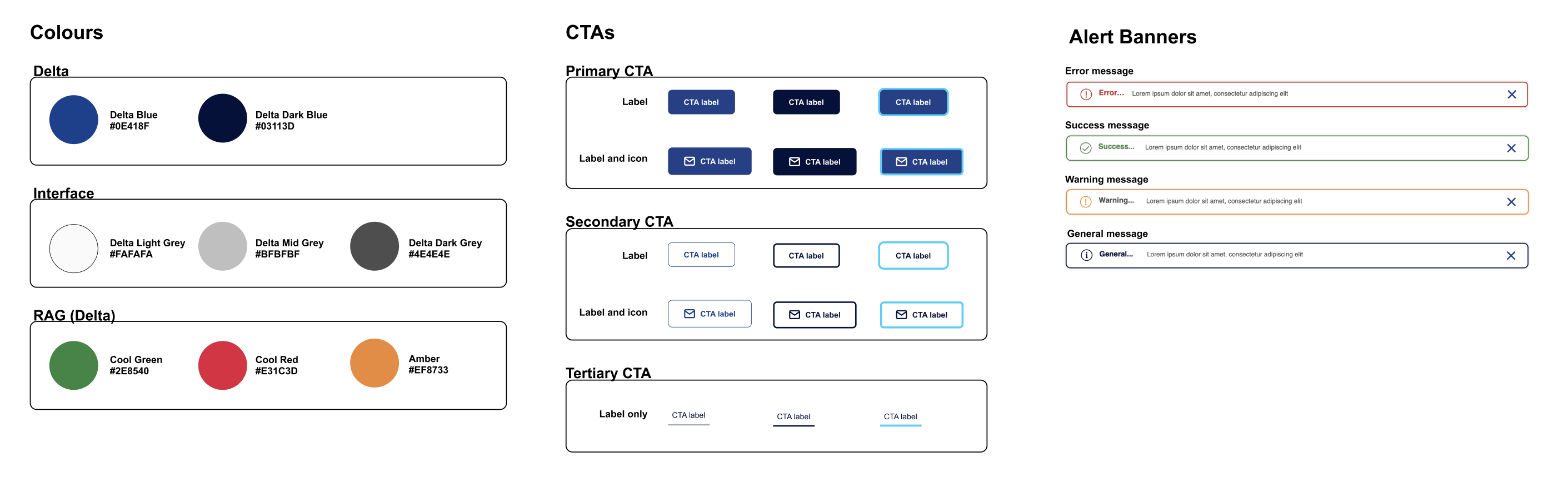
  • Developed reusable components, including buttons, forms, and data tables, that prioritized accessibility, consistency, and flexibility across complex workflows.
  • Aligned design decisions with engineering constraints to avoid destabilising fragile legacy code.
Components for Delta design system Designing component variants for Delta.

Interface Design

Alongside the Design System, we redesigned the interface to reduce cognitive load and improve data-heavy interactions:

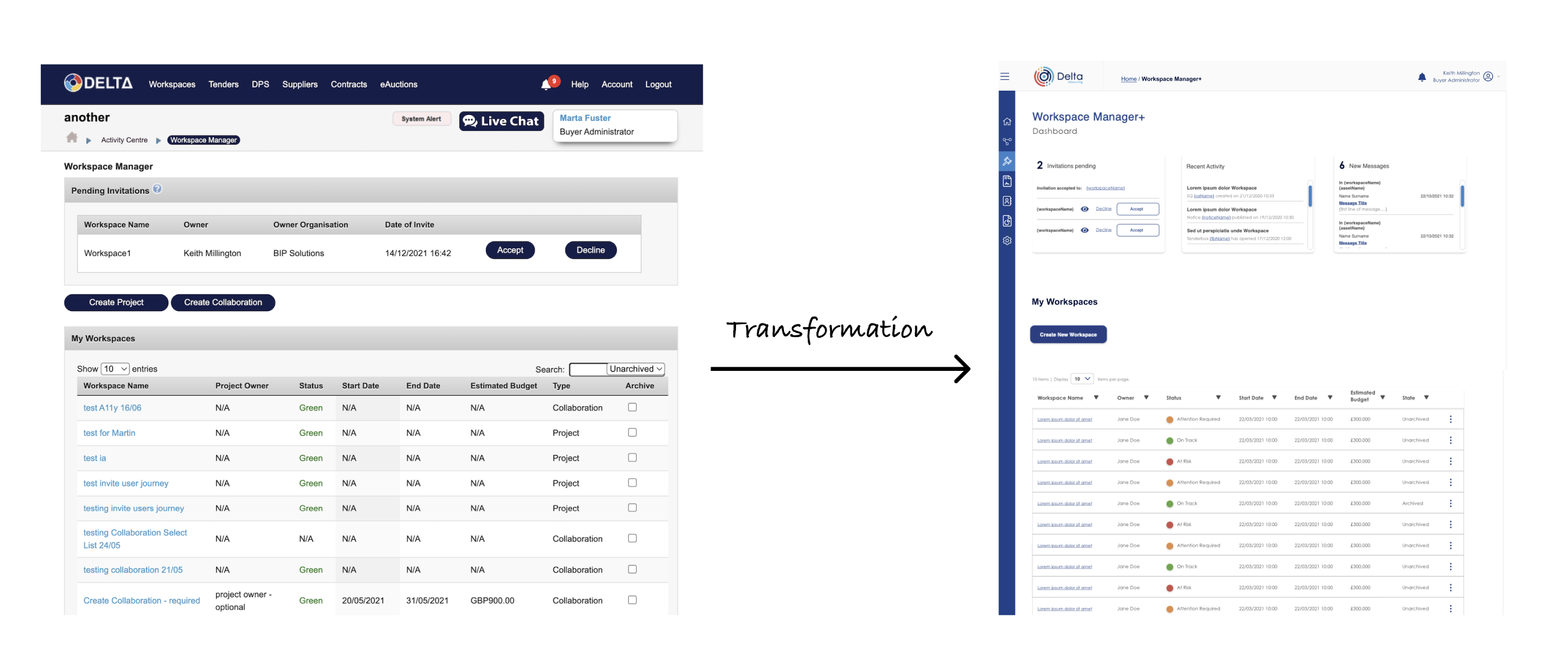
  • Introduced clear information hierarchy, intuitive search and filtering patterns, and whitespace to enhance readability.
  • Simplified process through clear CTAs, and confirmation modals to increase user confidence.
Transformation of Workspace Manager section on Delta platform. Transformation of Workspace Manager section on Delta platform.

Workflow Simplification

Key procurement journeys were simplified with careful management:

  • Reduced approval steps by consolidating redundant screens.
  • Simplified journeys: fewer clicks, grouped related fields, and embedded inline guidance.

Accessibility Leadership

From the outset, we committed to WCAG 2.1 AA compliance:

  • Led accessibility workshops for developers and designers, embedding ARIA labels, keyboard navigation, and colour contrast standards into components.
  • Mentored junior designers to ensure consistent application of accessibility principles across the platform.
  • Worked closely with engineering to implement accessibility improvements without disrupting fragile workflows.

Migration

The platform was relaunched in a single coordinated release:

  • A sandbox environment was built for developers, testers, and users to explore safely before go-live.
  • Multi-factor authentication was introduced to enhance security.
  • Maintained continuous stakeholder feedback loops during implementation to prevent disruptions in live processes.
We modernised through systems thinking, not surface redesign.

Results

Outcomes

  • The transformed platform delivered a clearer, more consistent interface that simplified high-frequency workflows and reduced user friction.
  • Introduced a multi-brand, scalable Design System that was adopted across BiP’s product suite, increasing efficiency and design consistency.
  • Embedded WCAG 2.1 AA accessibility standards, with the UX team mentoring developers and junior designers to make accessibility a shared responsibility.
  • Improved system confidence and security through clear status/error messages and Multi-factor authentication.

Takeaways

  • Working within constraints fosters creative, high-impact solutions.
  • Small improvements, from whitespace and confirmation messages to clear error states, can dramatically improve usability without a full rebuild.
  • The Delta transformation demonstrates that legacy platforms can be modernised safely and strategically.
  • Accessibility is cross-disciplinary, requiring champions embedded throughout design, development, and product teams.